There is a week every year—usually sometime in March—when the natural world suddenly becomes legible to us. The accumulated research of scientists, the patient observations of field stations and marine reserves, the careful work of conservation teams all converge into a kind of clarity. We see, for a moment, how little we actually know about the creatures we share this planet with.
This past week was one of those weeks. While the news cycle churned with its familiar urgencies, a quieter revolution was unfolding in laboratories, on coral reefs, and in the hearts of protected valleys. A six-year study revealed that sharks have something that looks remarkably like friendship. Rhinos walked into a valley they hadn't seen in nearly half a century. A plague that has killed millions of bats finally reached the Pacific Northwest. A possum appeared in a gift shop. A whale, pregnant and traveling north, struck a ship and died.
Together, these stories tell us something we should have known all along: that the wild things we've designated as background to our own lives are living with a complexity and agency that mirrors our own. They have preferences. They mourn. They navigate risks. They belong to places that they remember.
And we are still learning to see them.
The bonds they form, the lives they choose
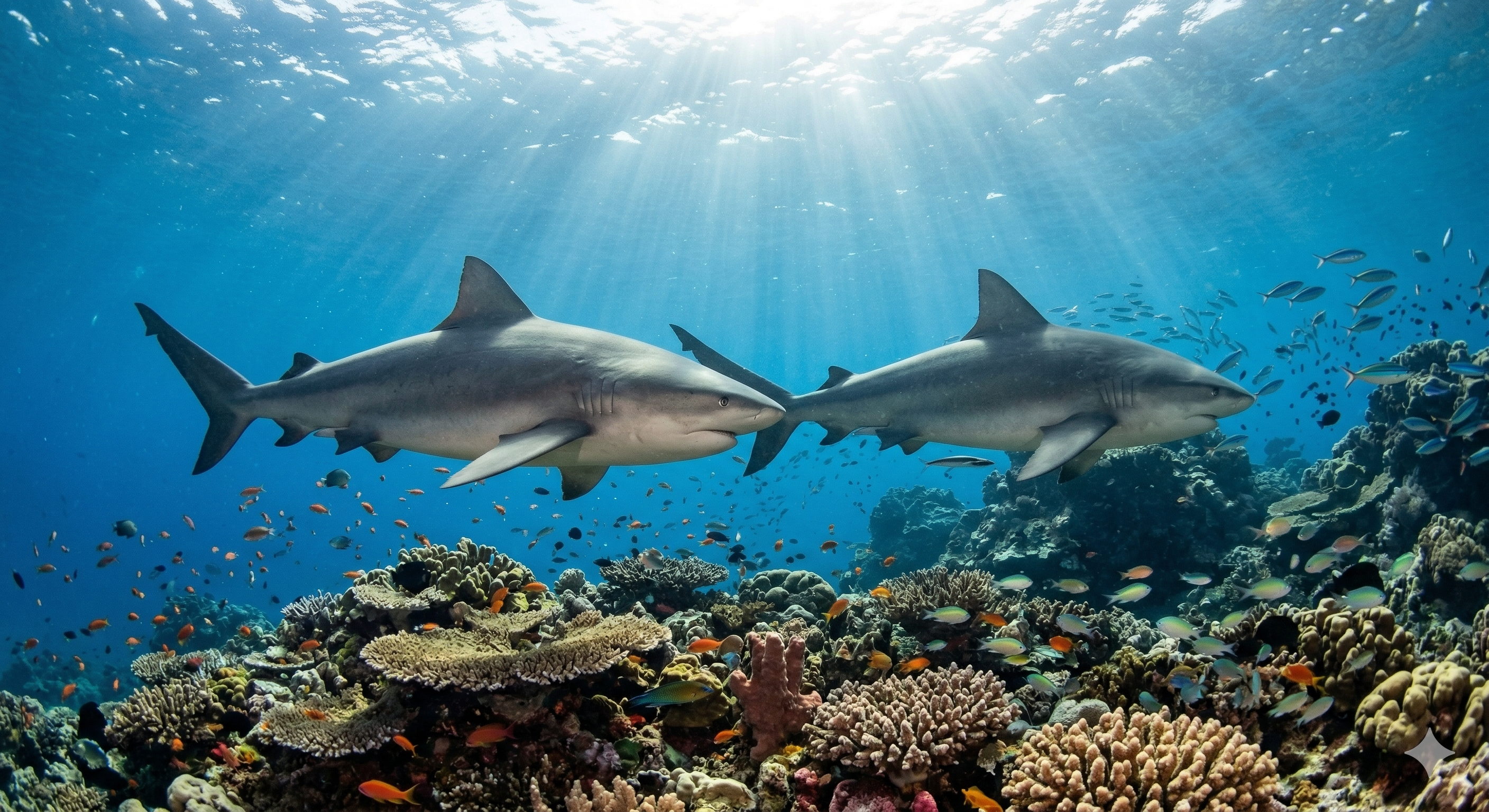
In the crystal waters of Fiji's Shark Reef Marine Reserve, something unexpected was happening. Researchers had come to study the behavior of bull sharks, those notorious apex predators, known in popular mythology as the ocean's most indiscriminate hunters. What they found instead was a parallel society—one governed not by aggression, but by choice.
For six years, a team from the University of Exeter and the Fiji Shark Lab tracked 184 individual bull sharks. They documented every encounter, every interaction, every moment of togetherness. The data they collected was remarkable not because it revealed new hunting patterns, but because it revealed something far more intimate: preference.
The researchers called it "active social preference." The sharks, both males and females, actively chose to spend time with specific companions. They swam in parallel formation. They led and followed. Most striking of all, both sexes preferred to associate with females, creating something that looked, functionally, like friendship.
Males had broader social networks, associating with more individuals overall. But the bonds they formed were characterized by consistent patterns of behavior—meeting, departing, returning. The sharks knew each other. They recognized one another in the water. They came back to the same gathering places because the other sharks they preferred would be there.
"Contrary to commonly held perceptions of sharks, our study shows they have relatively rich and complex social lives," the researchers noted in their paper, published this month in Animal Behaviour. The implication was staggering, though quietly stated: protecting the places where sharks gather is not just about protecting breeding grounds or hunting territories. It's about preserving the social networks that these animals depend on for their survival and wellbeing.
We have been taught to see sharks as machines of hunger, organisms without the capacity for anything resembling emotion. Yet here was evidence that they maintain relationships. That they have preferred companions. That they remember the individuals they have chosen to associate with, and that they seek them out again.
In destroying the gathering places where these social networks form—through fishing, through habitat loss, through the simple erosion of the ecosystems that support them—we are not just reducing shark populations. We are fragmenting the invisible web of relationships that makes a shark's life meaningful. We are erasing communities.
A kingdom reclaimed, a family restored
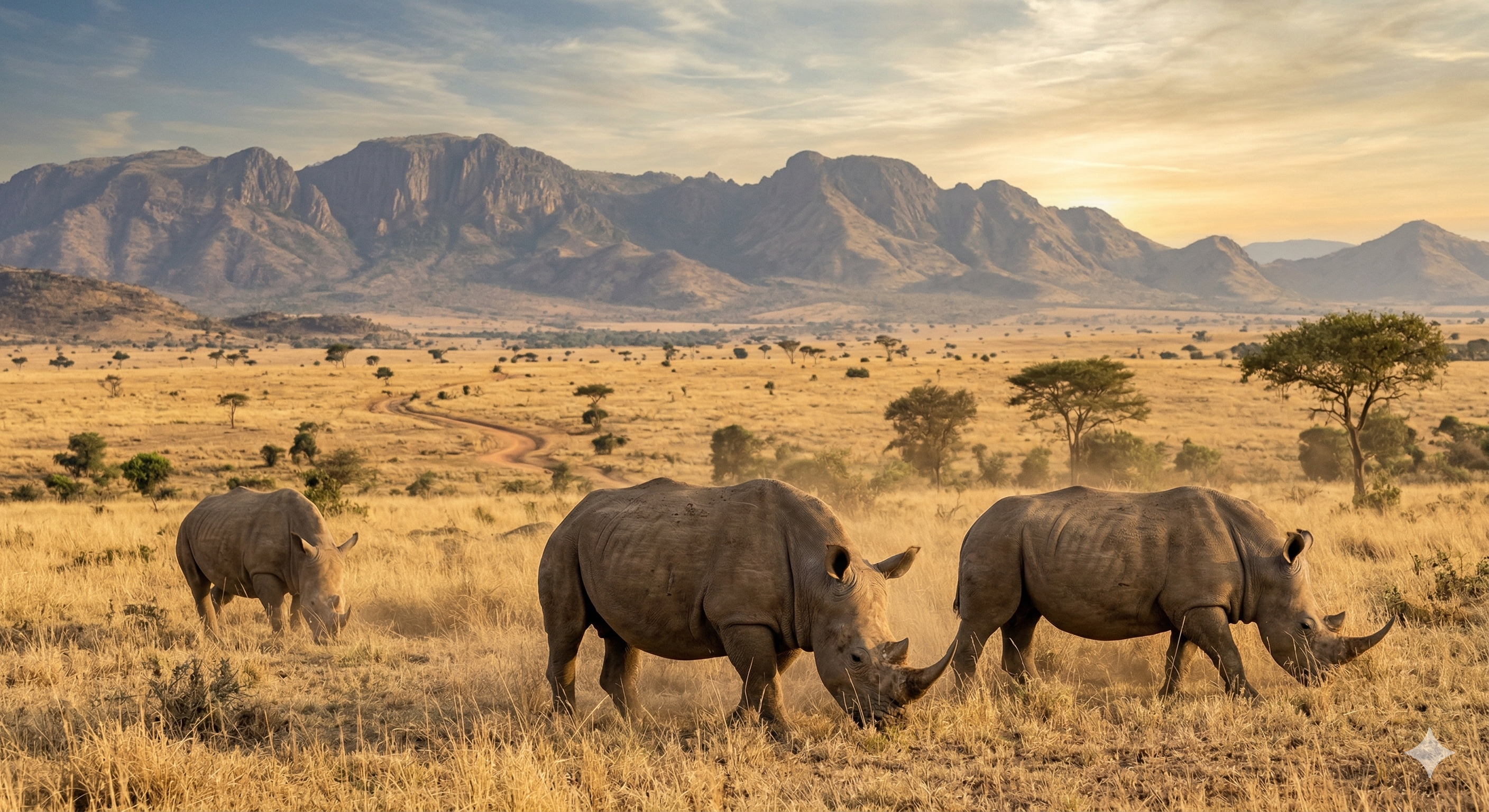
On March 17th, in the early light of an African morning, eight rhinos began a journey that some believed would never happen. Two of them were loaded first—massive Southern white rhinos from the Ziwa Rhino Sanctuary—their bodies lifted carefully into transport vehicles. Five more would follow from Kenya. These animals were not merely being relocated. They were being returned.
Kidepo Valley National Park, in the northeastern corner of Uganda, had not seen a rhino in forty-three years. In 1983, when the last rhino was killed, there were approximately 700 of them across Uganda. Poachers, exploiting the chaos of political instability, systematized their extinction. By the time conservation efforts could even begin, they were gone—vanished from a landscape where they had roamed for millennia.
The translocation was flagged off by Dr. James Musinguzi, Executive Director of the Uganda Wildlife Authority, in a ceremony that carried the weight of a resurrection. This was not merely a conservation project; it was a kind of national remembrance. It was an admission that we had failed these animals, and a commitment to begin again.
The eight rhinos being transported represented more than individuals. They represented a species' reclamation of territory that had been stolen from them. Kidepo Valley, with its vast savannas and protected boundaries, was being prepared as a new home—or rather, as a return to an ancient home. The rhinos would have space to establish territories, to breed, to live with the kind of freedom that is increasingly rare for their species.
The reintroduction aligned with Uganda's National Rhino Conservation Strategy—a comprehensive plan to restore these animals to landscapes where they could thrive. It was born from understanding that extinction is not inevitable. That loss, sometimes, can be reversed. That a place can remember its past inhabitants and welcome them home.
These eight rhinos will be pioneers. They will be the first to walk this valley in a generation. And if the translocation succeeds, they will be followed by more. The kingdom, slowly, will be reclaimed.
A fungus knows no borders
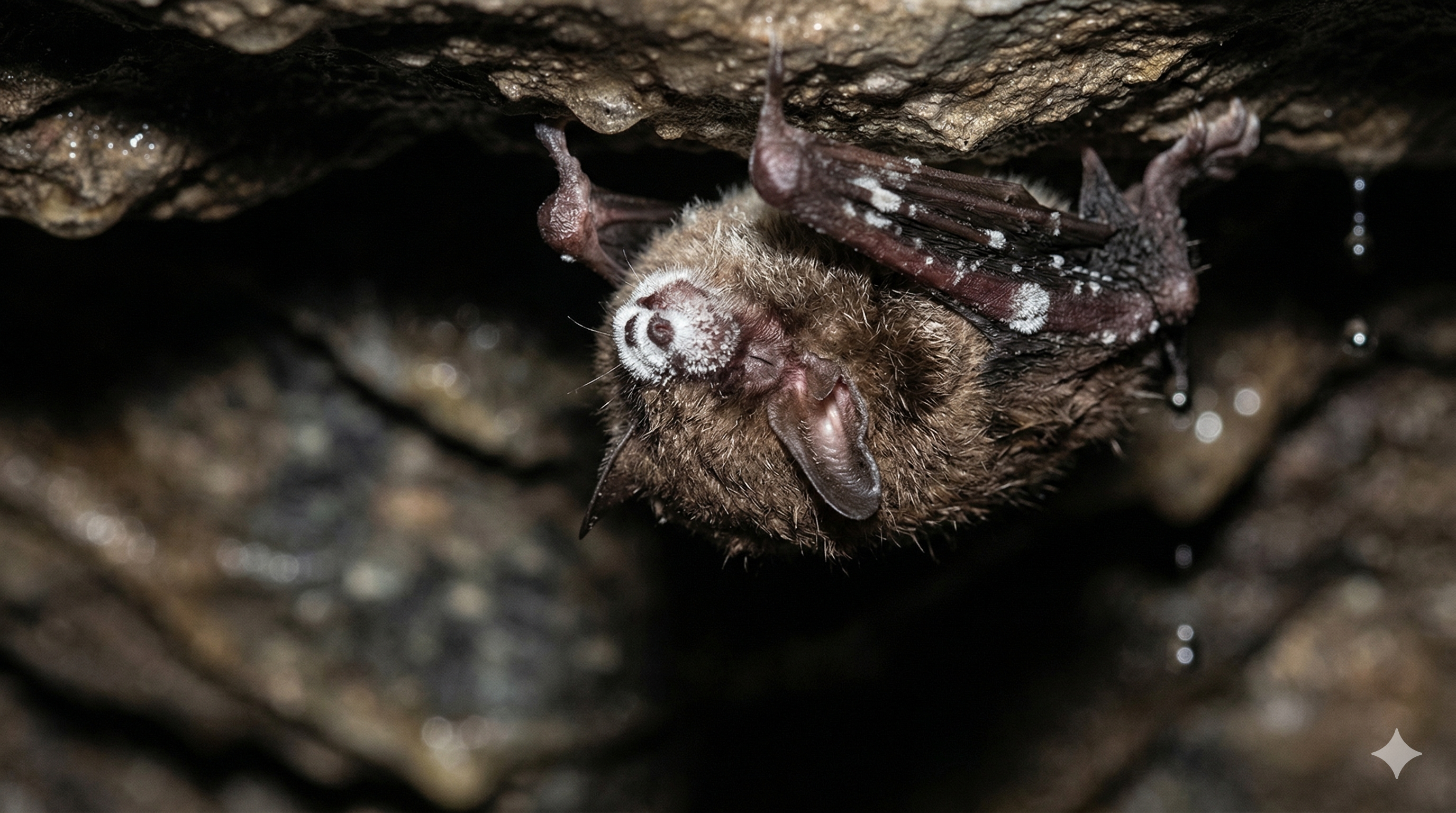
In the winter of 2006, a strange white growth was first observed on the faces of bats in New York. It appeared as if a dusting of frost had settled on their noses and ears while they slept in hibernation. Scientists eventually identified the culprit: a fungus called Pseudogymnoascus destructans. It was, for bats, a death sentence.
White-nose syndrome, as the disease came to be known, spreads through hibernating bat colonies like a whisper of death. The fungus colonizes the skin of the wings and ears, disrupting the delicate chemistry that allows these animals to enter hibernation safely. Infected bats wake too frequently, burning through their fat reserves in the cold of winter. They starve. They freeze. They die by the millions.
For twenty years, the disease marched westward across North America. It was an invasion so methodical, so relentless, that scientists could predict its movements years in advance. And now, finally, it had reached the Pacific Northwest—the last frontier it had not yet claimed.
In March 2026, white-nose syndrome was confirmed for the first time in Oregon bats. Six Yuma myotis and one little brown myotis were found dead in residential areas across Columbia and Benton counties. The bats had likely succumbed in late winter, their bodies discovered as the season turned toward spring. The fungus had found them.
Idaho confirmed its first cases at almost the same moment—three bats in northern Idaho's Bonner and Kootenai counties. The disease had reached the edge of the continent. There was nowhere left for it to go but inward, deeper into the populations of bats that had, until now, been spared.
Researchers had actually detected the fungus itself in Oregon bat guano the previous year, suggesting the pathogen had been present for some time. But 2026 marked the first year that the disease manifested as full illness, as death. It was the crossing of a threshold that had long been anticipated but could not be prevented.
The implications are staggering. Millions of bats have already died from white-nose syndrome across North America. These are not creatures that can easily recover their populations—they breed slowly, living long lives and raising only one or two pups per year. The disease does not kill with discrimination; it kills whole colonies, whole generations, wiping out decades of accumulated life in a single winter.
And now it has reached the bat populations of the Pacific Northwest, which had perhaps five or ten years at most before the fungus would eventually find them. That window has closed. The plague, which started two decades ago in a cave in New York, has finally moved west.
An unexpected traveler at the gate
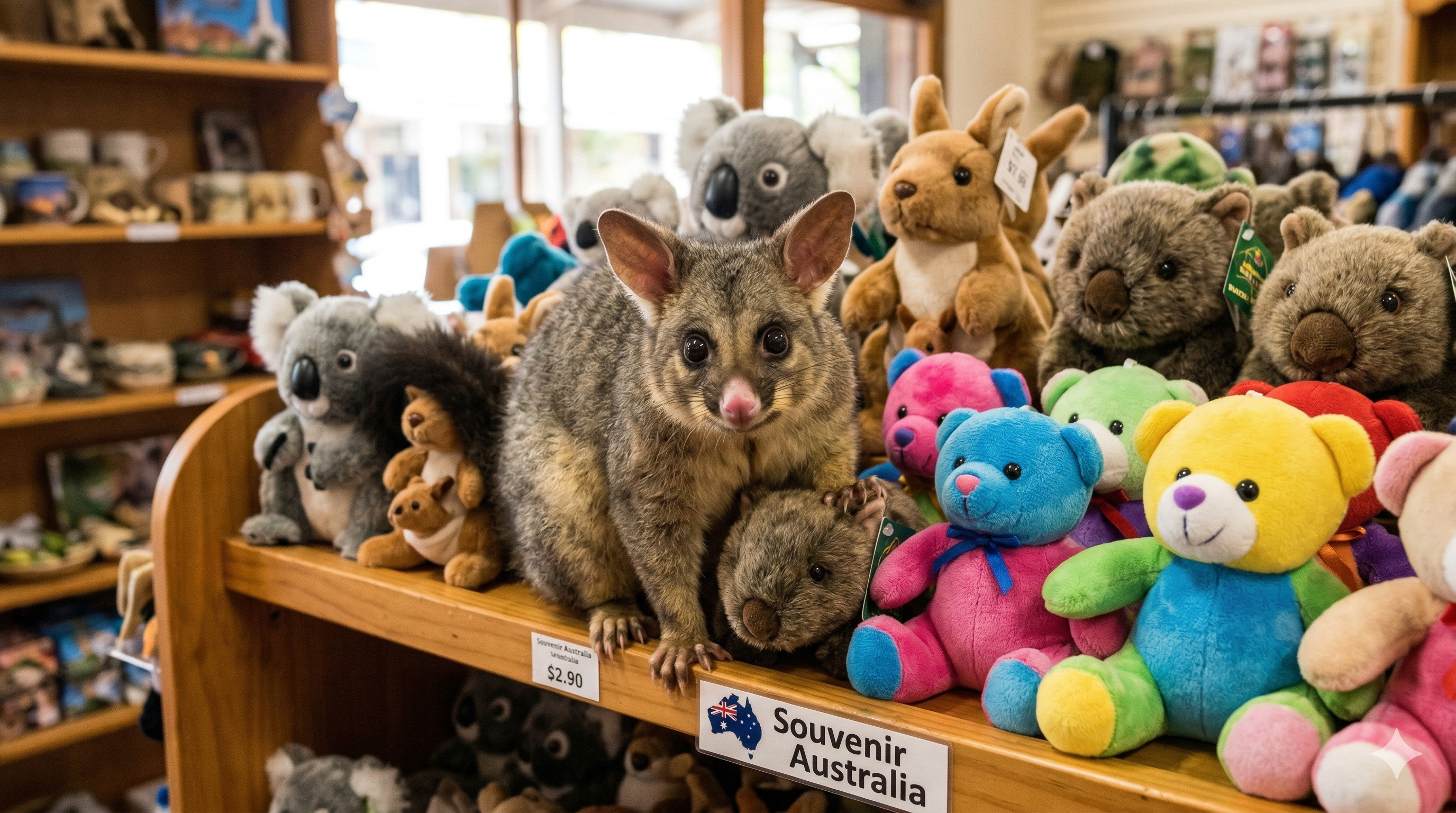
There is something deeply Australian about the absurdity of what happened at Hobart Airport on March 18th. A passenger entered a gift shop, browsing among the souvenirs that tourists buy to mark their passage through Tasmania—plush toys of kangaroos and Tasmanian devils and other icons of the island's wildlife. And then something moved.
A blink. A twitch of a nose. One of the "toys" was alive.
It was a brushtail possum—a common native marsupial—that had somehow managed to infiltrate the gift shop during the terminal's recent construction and renovation. While workers had been upgrading the facilities, the possum had found its way inside and established itself among the merchandise, nesting among the rows of plush representations of animals like itself. It was a living embodiment of the blurred boundary between the wild and the human, between the genuine article and the fake.
The story, by any reasonable measure, should have remained local. A possum at an airport. It happens. But in an age of global connectivity, when curiosities can travel at the speed of light, the image of this possum—startled, alive, impossibly real amid a sea of synthetic facsimiles—captured something that resonated worldwide.
CNN reported it. The BBC picked it up. The Guardian found in it a metaphor for the wild world's persistent intrusion into human spaces. Yahoo News ran it as a feel-good story in a news cycle dominated by the expected miseries of the season. The possum became, for a moment, one of the most recognized animals in the world.
Airport staff handled it with careful kindness, removing the animal unharmed and releasing it back into the landscape beyond the terminal. The gift shop returned to selling its merchandise. The possum returned to the world.
But the image lingered. Here was a creature that had not been eradicated by human expansion, that had not been reduced to extinction or near-extinction, that had simply adapted and infiltrated. The possum had walked into the space we had created and reminded us that the wild world is not something that exists only in designated reserves and protected valleys. It exists in the margins of our attention. It exists in the spaces we have overlooked.
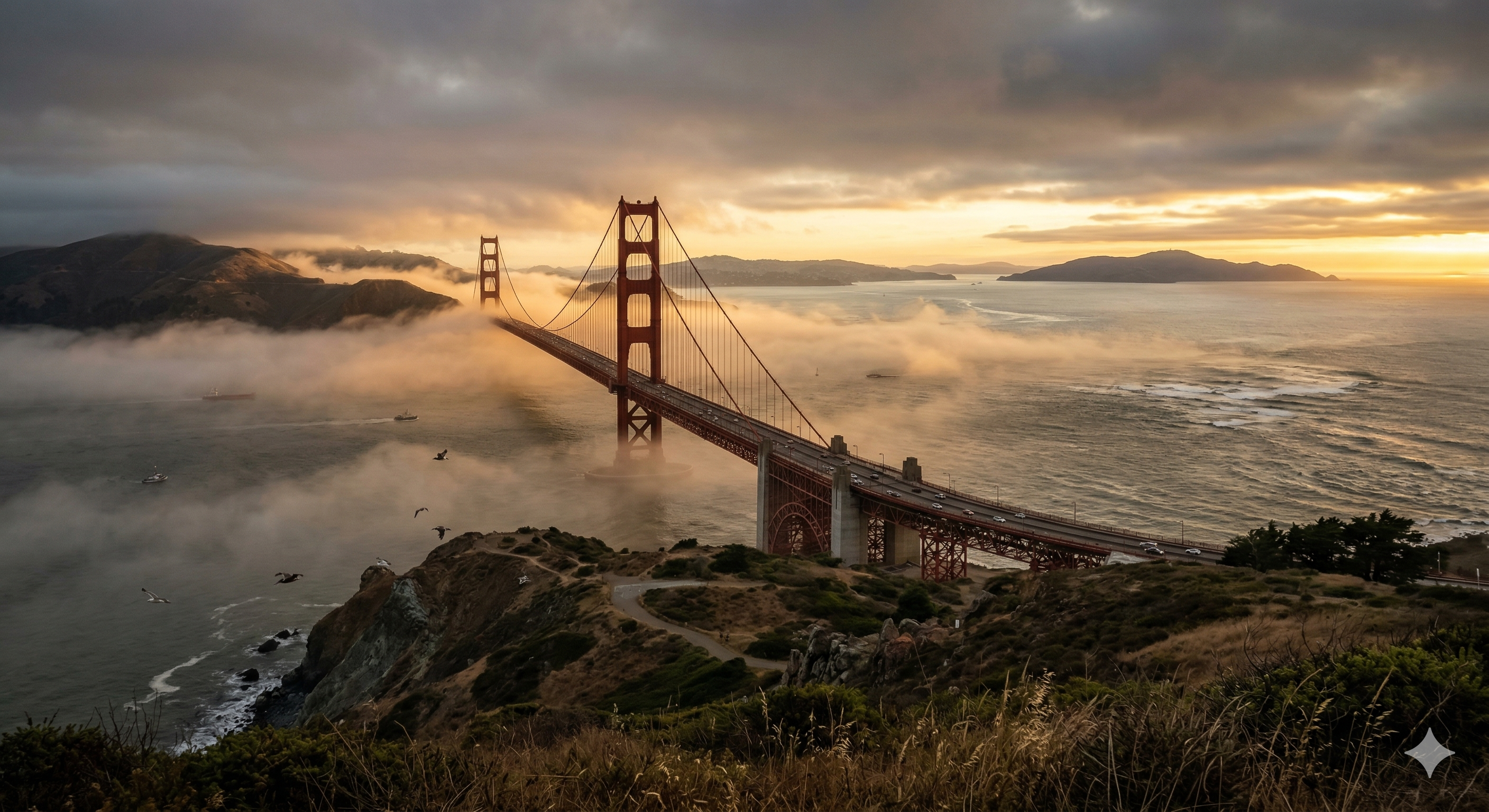
Where the bay meets the open ocean, danger waits
The gray whale, at forty-two feet long and pregnant with the next generation of her species, was traveling north. She had spent the winter in the lagoons of Baja California, where the waters are warm and safe and the breeding grounds offer refuge from the predators of the open ocean. Now, as March arrived and the water began to warm, she was beginning her journey back to the Arctic, to the feeding grounds where she would spend the summer months consuming vast quantities of amphipods and krill, replenishing the energy she had expended carrying her calf.
This northward migration is one of the longest journeys undertaken by any mammal on Earth. The gray whales of the Eastern Pacific travel over twelve thousand miles round-trip, moving between the extreme environments of the Arctic and the tropics in a rhythm that has structured the entire architecture of their lives.
On March 17th, 2026, a forty-two-foot female gray whale was found floating dead near the Golden Gate Bridge, at the entrance to San Francisco Bay.
The necropsy, performed after the whale was towed to Angel Island, revealed two lacerations around the peduncle—the muscular section that connects the spine to the flukes. The wounds were consistent with vessel strike. A ship, passing through the bay, had struck the whale. The force of the collision, or the injuries it inflicted, had killed her. The calf she was carrying was lost as well.
The tragedy itself was not unique. In 2025, twenty-one gray whales had been found in the San Francisco Bay area. Nine of them were classified as probable vessel strikes. That year had been record-breaking for whale sightings in the bay—thirty-six individual whales had entered the waters in a single season. It was, on the surface, a conservation success story. The whales were recovering. Their populations were rebounding from the brink of extinction.
But recovery, it turns out, carries its own costs. More whales in the bay means more opportunities for collision. More whales passing through narrow shipping channels means more risk of encounter with cargo ships and tankers. The very success of conservation efforts has placed these animals in a new kind of danger—not the danger of hunting and deliberate killing, but the danger of living in a world that has been carved up and colonized by human commerce.
The whale that died near the Golden Gate was a victim of that paradox. She had survived the threats that had nearly eradicated her species. She had navigated predators and storms and the vast distances of the open ocean. And then, at the threshold of safety, at the place where the bay meets the open water and the migration route takes shape, she encountered a ship and her journey ended.
There is no easy solution to this problem. The shipping lanes that kill whales also feed our economies, deliver goods, sustain the complex networks of commerce that allow cities like San Francisco to exist. We cannot simply remove the ships. But neither can we ignore the cost that our presence exacts on the creatures that share these waters with us.
The whale was pregnant. The calf will never be born. The impact of one ship, in one moment, will ripple through a population already stressed by warming waters and changing food sources. It will affect breeding numbers for years to come. And there is no way to measure, in the ledger of conservation, what was lost in that collision—not just one life, but the genetic potential, the behavioral knowledge, the individual thread that connected this animal to the future of her kind.
This was the week that taught us we are still learning to see. The sharks with their friendships, the rhinos with their reclaimed kingdoms, the bats succumbing to an invisible plague, the possum in the gift shop, the whale at the threshold—all of these were moments of clarity.
We live on a planet with creatures that are vastly more complex, more social, more knowable than we have given them credit for being. And yet we persist in treating them as background, as obstacles to overcome, as resources to exploit. We are just beginning to understand that they are none of these things.
They are living their lives with as much intention and meaning as we live ours. They have friends. They remember places. They navigate losses. They yearn for home. And the world will be diminished by every one of them that we lose through carelessness, through greed, through simple inattention.
The week of March 17-19, 2026, will not be remembered as a turning point. It will not be inscribed in the annals of environmental history as the moment when humanity chose differently. But it was a week when the invisible became visible, when the private lives of wild things were briefly illuminated, when we had the chance to see them clearly and choose to protect them.
Whether we will do so remains to be written. But at least, for a moment, we saw.