Something is happening to the young. Not suddenly, not dramatically — not in the way a disease usually announces itself, with symptoms that demand attention and send people to doctors. Rather, the change has been accumulating quietly for decades, written into the stiffness of colon tissue and the phosphorylation of brain proteins and the shifting bacterial populations of the gut. The body, it turns out, keeps accounts. The entries are made in childhood, in adolescence, in early adulthood, and the balance is rendered only much later — usually when it's too late to dispute the charges. This week, an unusual cluster of medical stories suggests that the accounting is changing. Researchers are learning to read the ledger early. The question is whether, once you can see what's coming, you can do anything about it.

The Stiff Gut
Something about the colon has changed in people born after roughly 1985. The numbers are stark: colorectal cancer is now the leading cause of cancer death in Americans under fifty, surpassing breast, prostate, and lung cancer in this age group. The rate in under-fifties has been rising by nearly three percent per year, even as overall colorectal cancer rates have slightly declined in older populations. For decades, the explanation seemed obvious but frustratingly vague — something about the modern diet, microplastics, the microbiome, the sedentary life. Researchers gestured at the usual suspects without landing a specific blow.
Now, bioengineers at the University of Texas at Dallas have found something concrete: the tissue is stiff. In a study published in the January print edition of Advanced Science, researchers analyzed colon tissue from younger colorectal cancer patients and found that both tumor tissue and the surrounding healthy tissue were mechanically stiffer than comparable tissue from older patients. The stiffness appears to be caused by changes in the extracellular matrix — the load-bearing collagen scaffolding within the colon wall — which can thicken and harden through inflammation or fibrosis. A stiff matrix, the researchers suggest, creates an environment more permissive to cancer development, altering how cells sense and respond to their mechanical surroundings.
It is a physical clue to an epidemiological mystery, and it opens new questions rather than closing them. Why is the colon stiffer in younger people? Is it diet? Gut bacteria altering the matrix through chronic, low-grade inflammation? A sedentary life that fails to maintain healthy tissue turnover? Decades of processed food creating the kind of persistent mucosal irritation that remodels the extracellular matrix before cancer ever appears? Nobody yet knows. But the finding matters because it suggests a potential target: not a gene to fix or a virus to kill, but a physical property of tissue that might be measured, monitored, and potentially modulated before cancer takes hold.
"Both tumor tissue and nearby healthy colon tissue were mechanically stiffer in younger patients — even before cancer had appeared."
There is something almost banal about the discovery, in the way that many medical breakthroughs are banal: the colon is like a pipe, and pipes that have been under chronic stress become stiff and prone to failure. The body is, in this light, less a mystical system than a piece of infrastructure — and infrastructure ages at different rates depending on what runs through it.
The Silent Ledger
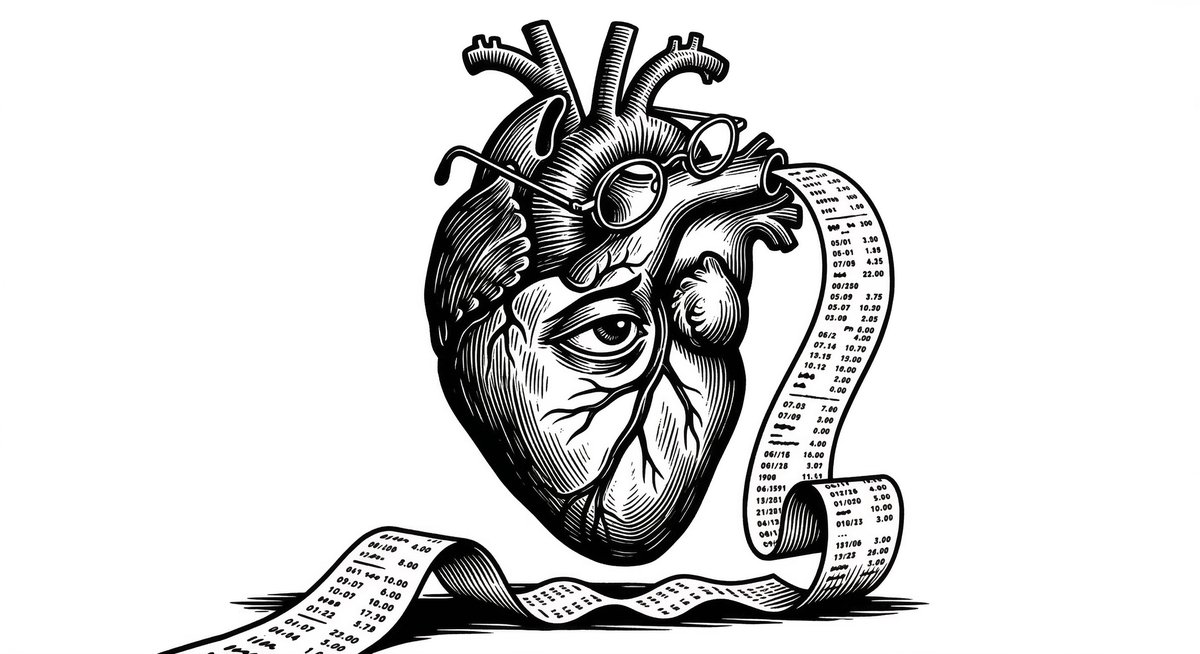
For most of the twentieth century, high cholesterol was understood as a problem that arrived in middle age — something to worry about in your fifties, to treat with statins in your sixties. This week, the American College of Cardiology and the American Heart Association quietly moved the clock back by a generation.
The 2026 ACC/AHA guidelines on dyslipidemia recommend starting statin therapy in adults with elevated familial cholesterol or significantly high LDL as early as age thirty — or even younger for those with strong family history or a thirty-year calculated cardiovascular risk above a new threshold. More broadly, the guidelines emphasize that cardiovascular risk accumulates through childhood and early adulthood; the artery damage done before forty is what kills you at sixty. "Early exposure to hypercholesterolemia in childhood," the guidelines note, "is associated with increased cardiovascular disease risk in middle age." This is not surprising to anyone who has thought carefully about the biology. It is surprising that it took until 2026 for guidelines to reflect it.
The guidelines also make a new class 1 recommendation — the highest level, reserved for interventions with strong evidence — to measure lipoprotein(a), or Lp(a), at least once during every adult's lifetime. Lp(a) is a variant of LDL cholesterol that is almost entirely genetically determined. It does not respond to diet. It does not respond to exercise. It elevates cardiovascular risk in roughly one in five people who carry elevated levels, and most Americans have never had it tested. Most doctors have never ordered it. It is a risk hiding in the blood, invisible, since birth — and the previous guidelines treated it as a secondary consideration, a "risk enhancer" rather than a mandatory screen.
What these guidelines collectively describe is a disease process that begins in children, is carried silently through decades of normal-seeming life, and finally detonates in the form of a heart attack or stroke in what should be a person's most productive years. The new recommendations are an acknowledgment that medicine has been reading the ledger too late. Whether the healthcare system has the capacity to act on them — to screen thirty-year-olds, test Lp(a) universally, prescribe statins to the healthy-seeming young — is a separate and less comfortable question.
The Vagus Telegraph
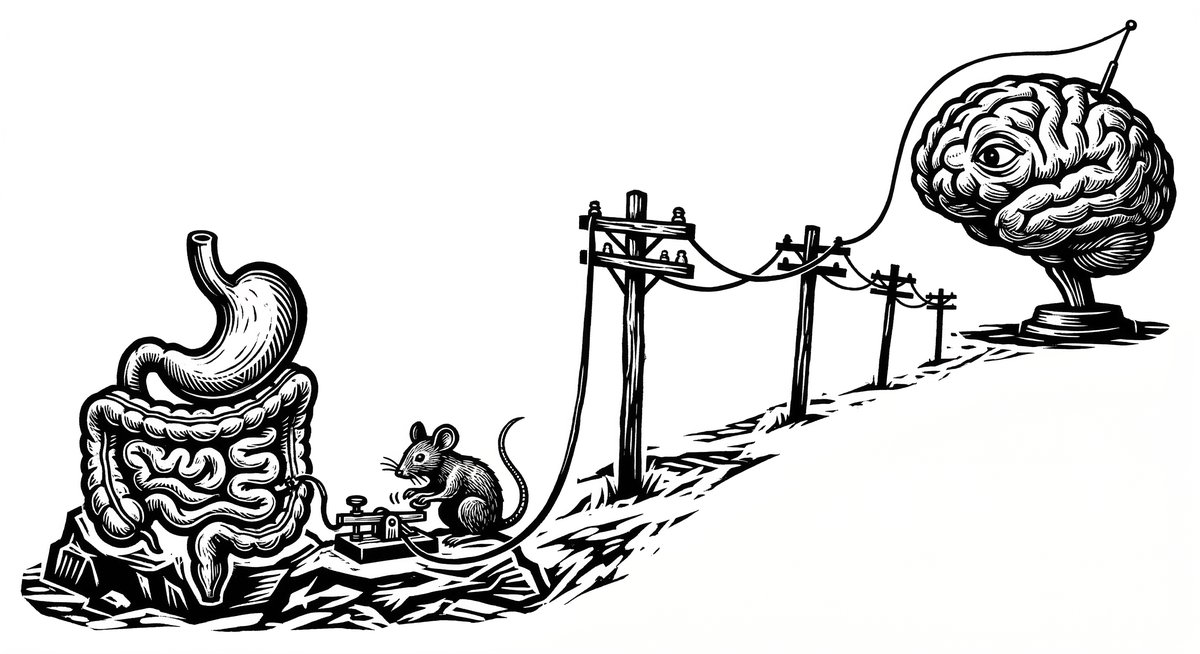
Consider the vagus nerve: a long, wandering bundle of fibers running from the brainstem down through the chest and into the abdomen, connecting the brain to the heart, lungs, and gut. It is one of the oldest parts of the vertebrate nervous system, predating mammals by hundreds of millions of years. And according to a study published this month in Nature, it may be the channel through which the aging gut is quietly erasing the memories of the aging brain.
The research, conducted by Christoph Thaiss, Guillaume de Lartigue, Niklas Blank, and colleagues at Stanford and UCSF, found that as mice age, the composition of their gut microbiome shifts — specifically, a species called Parabacteroides goldsteinii becomes more abundant. This bacterial change triggers an inflammatory response in immune cells lining the gut, which in turn interferes with the vagus nerve's ability to signal the hippocampus, the brain's primary site of memory formation and spatial navigation. Old mice showed diminished ability to recognize novel objects and navigate mazes. The cognitive loss was not caused by damaged neurons in the brain itself. It was caused by a noisy wire.
When the researchers stimulated the vagus nerve — using either direct electrical stimulation or pharmacological agents that activate the gut hormone CCK or GLP-1 receptors — the animals recovered their cognitive abilities. Old, forgetful mice became indistinguishable in memory tests from young control animals. The recovery was not partial or modest. It was complete.
"Old mice, given treatments that restored vagus nerve signaling, became indistinguishable in memory tests from young control animals."
The finding is in mice, and the human extrapolation is not yet proven. But the mechanistic logic is compelling, and it matches much of what has been observed in human epidemiology: gut health correlates with cognitive health across populations; probiotic interventions sometimes improve mood and cognition; the connection between irritable bowel disease and depression is well-established if poorly understood. The vagus nerve runs through all of it. The gut, it seems, is not merely processing food. It is composing a constant message to the brain about the state of the world, and as the microbiome ages, the message becomes garbled.
There is an irony here that will become relevant shortly. The drugs the Stanford researchers used to restore the vagus signal — GLP-1 receptor agonists — are the same class of medications currently being prescribed to hundreds of millions of people for weight loss. In mice, they reverse cognitive aging via the gut-brain axis. In humans, as we are about to see, they are causing scurvy.
The Blood Oracle

On March 10th, researchers at UC San Diego published findings in JAMA Network Open that should, by rights, generate more alarm than they have. Using stored blood samples from 2,766 participants in the Women's Health Initiative Memory Study — women aged sixty-five to seventy-nine who were cognitively healthy when they enrolled in the late 1990s — the researchers measured levels of p-tau217, a phosphorylated form of a protein associated with the brain changes of Alzheimer's disease. They then followed the women for up to twenty-five years.
The results were unambiguous. Women with higher p-tau217 levels at enrollment were significantly more likely to develop dementia in the decades that followed. The relationship was dose-dependent: higher levels meant greater risk. Women at the top of the distribution faced the greatest probability of losing their memories, their recognition of faces, their knowledge of their own names — and they had been carrying the biological signature of that future loss in their blood a quarter century before the first symptom appeared.
Twenty-five years. A mortgage. A career. Children grown and gone. Grandchildren born and starting school. All of it happening while the phosphorylated tau was accumulating in the brain, invisible and unmeasured. The disease was not a sudden event. It was a slow emergency that had been underway since their sixties, detectable by a standard blood assay, while the women themselves felt entirely well.
The clinical implications are still being worked out. We don't yet know whether early detection translates to meaningful prevention — whether a person told at fifty that their blood shows elevated p-tau217 can do anything to change their trajectory. The treatments available for Alzheimer's remain modest. But the window of opportunity, if one exists, may be precisely in this kind of early signal: when the disease is still a prediction, not yet a diagnosis, and when interventions — exercise, sleep, diet, perhaps emerging pharmaceuticals — have the most time to work.
The Digital Dietitian

There is a temptation, reading these stories about the body's accumulated risks and science's growing ability to detect them, to feel a kind of cautious hope. The ledger is being read earlier. The signals are becoming visible before they become irreversible. Perhaps the interventions will follow.
Then you encounter the study published this week in Contemporary Pediatrics, in which researchers presented five major AI chatbots — ChatGPT, Gemini, Claude, Bing Chat, and Perplexity — with the scenario of an overweight or obese teenager seeking weight-loss meal plans. The AI systems prescribed diets averaging nearly seven hundred fewer calories per day than the human clinical expert, and consistently produced macronutrient profiles misaligned with medical guidelines: too little carbohydrate, too much protein, caloric totals suited for a sedentary adult rather than a developing adolescent. In several cases the chatbots generated plans that, followed over time, would risk stunted growth, compromised bone mineralization, and the kind of dietary restriction patterns that function as a gateway to clinical eating disorders.
The irony is almost too neat. Just as medicine is developing blood tests that can detect Alzheimer's disease twenty-five years before symptoms appear, we are simultaneously deploying AI systems that may be seeding eating disorders in the cohort that will be testing for dementia thirty years hence. The tools are not malevolent. They have simply been trained on adult data, optimized for engagement, and deployed without the clinical guardrails that a registered dietitian would apply as a matter of professional duty.
"The chatbots prescribed diets averaging nearly 700 fewer calories per day than human clinical experts — enough to risk stunted growth, bone loss, and disordered eating."
But this is only half the irony. The other half involves the GLP-1 drugs — semaglutide, tirzepatide — that have become perhaps the most celebrated pharmaceutical development of the decade. They suppress appetite powerfully. They produce substantial weight loss. They appear, in the Stanford mouse study just described, to reverse cognitive decline by stimulating the vagus nerve. And they are, according to clinical studies reported this week, causing a resurgence of scurvy.
Scurvy. The disease of sailors who spent months at sea without fresh produce, the affliction that rotted the gums and loosened the teeth of eighteenth-century navies. Australian researchers have documented patients on GLP-1 drugs developing vitamin C deficiency severe enough to cause bruising, gum bleeding, and wound-healing failure. The mechanism is mercilessly simple: GLP-1 drugs suppress appetite so completely that some users eat fewer than eight hundred calories a day without realizing it, inadvertently eliminating the fruits and vegetables that supply vitamin C. Studies have found malnutrition in as many as thirty-eight percent of GLP-1 users preparing for joint surgery, compared with eight percent for non-users. The miracle drug is also a famine — and the famine is silent, because patients feel full.
What this week's cluster of health stories adds up to, held together, is an emerging portrait of medicine at a threshold. For most of history, diseases announced themselves through symptoms. The diagnostic window opened only when the disease was already well established. Now the window is opening earlier: phosphorylated proteins in stored blood samples, stiffness in colon tissue, cholesterol measurements in thirty-year-olds, bacterial profiles in aging guts. The body has been keeping the ledger all along; we are only now learning to read it.
But reading the ledger is not the same as correcting it. The twenty-five-year warning in a blood sample is only useful if there is something to do with a twenty-five-year warning — and for Alzheimer's disease, the something remains uncertain. The new cholesterol guidelines can recommend earlier treatment, but they cannot force people to be tested, or afford the medications, or find a physician willing to prescribe statins to a healthy-seeming thirty-year-old with a number he's never heard of called Lp(a). The gut-brain research is compelling and is in mice. The colon-stiffness findings are a mechanism without a therapy.
And in the meantime, a billion teenagers are asking AI chatbots how to lose weight, and the chatbots are prescribing famine. The people taking GLP-1 drugs to address the metabolic consequences of a processed-food diet are developing a disease last seen on wooden sailing ships. The same class of drugs that appears to reverse memory loss in aging mice is causing nutritional collapse in living humans. The tools proliferate faster than the wisdom to use them; the diagnostics outpace the therapeutics; the predictions arrive before the prevention has been invented.
The body's ledger is open. The entries have been made. The question — as it has always been, in medicine as in everything else — is whether we will read it in time to do anything about it.